Case Report | | Peer-Reviewed

Lung Metastasis of HER2-positive Breast Cancer with Squamous Cell Differentiation Phenotype: A Case Report

Received: 10 November 2025     Accepted: 24 November 2025     Published: 17 December 2025
Views:       Downloads:
Abstract

Drug resistance, recurrence, and metastasis are the main challenges that can lead to treatment failure and deteriorate outcomes of patients with breast cancer. Breast cancer metastasizes to different organs and may present with different phenotypic features. However, the underlying mechanisms of phenotypic plasticity of breast cancer still remain unclear. We herein report a case of HER2-positive breast cancer in which the patient developed acquired therapeutic resistance following standard postoperative adjuvant chemotherapy combined with anti-HER2 targeted therapy. The patient initially responded to treatment; however, one year after completion of therapy, new bilateral pulmonary nodules emerged. Subsequent pathological examination confirmed metastatic carcinoma with a transdifferentiated squamous cell phenotype. Comprehensive biomarker analyses, including immunohistochemistry (IHC), fluorescence in situ hybridization (FISH), and next-generation sequencing (NGS), were performed on matched samples from the primary breast tumor and the corresponding lung metastatic lesions. Integrated diagnostic results confirmed that the pulmonary lesions were metastatic in origin from the breast, harboring HER2 amplification as well as PIK3CA and TP53 mutations. In contrast to the primary lesion, the metastatic lung lesions demonstrated acquisition of a squamous phenotype, accompanied by multiple chromosomal heterozygous/homozygous deletions and copy-number gain that may have contributed to this phenotypic transformation. Despite HER2 amplification, the pulmonary metastases showed negative HER2 protein expression, possibly reflecting tissue-specific gene expression differences. These findings provide new insights for the clinical management of HER2-positive breast cancer.

Published in American Journal of Clinical and Experimental Medicine (Volume 13, Issue 6)
DOI 10.11648/j.ajcem.20251306.12
Page(s) 170-176
Creative Commons

This is an Open Access article, distributed under the terms of the Creative Commons Attribution 4.0 International License (http://creativecommons.org/licenses/by/4.0/), which permits unrestricted use, distribution and reproduction in any medium or format, provided the original work is properly cited.

Copyright

Copyright © The Author(s), 2025. Published by Science Publishing Group

Keywords

Metaplastic Breast Cancer, Lung Metastasis, Squamous Cell Metaplasia, Case Report

1. Introduction
HER2-positive breast cancer accounts for approximately 20% of all breast cancer cases. The standard neoadjuvant or adjuvant treatment regimen typically consists of anthracycline- and taxane-based chemotherapy combined with trastuzumab and pertuzumab. However, about 30%-40% of patients show resistance to this therapeutic approach, leading to disease recurrence and metastasis. Common metastatic sites include the lungs, brain, and liver, but the underlying mechanisms remain incompletely understood. Here, we report a rare case of HER2-positive breast cancer with pulmonary metastasis exhibiting squamous metaplasia following adjuvant chemotherapy and anti-HER2 targeting therapy. Notably, the patient presented with pulmonary nodules that, based on intraoperative frozen section examination, were initially suspected to be primary squamous cell carcinoma of the lung. We finally confirmed that the intrapulmonary lesions represented metastatic breast carcinoma with metaplastic features rather than primary lung carcinoma through comprehensively histopathological examination, immunohistochemical staining, and next-generation sequencing (NGS) analysis. Actually, phenotypic transformation in metastatic breast cancer involving squamous metaplasia is relatively uncommon, this case highlights the diagnostic challenge in distinguishing primary lung malignancies from rare metaplastic metastatic breast cancer and provides a diagnostic approach combining histopathology, immunophenotyping, and molecular profiling, which may serve as a valuable reference for clinicians and pathologists in similar scenarios.
2. Case Presentation
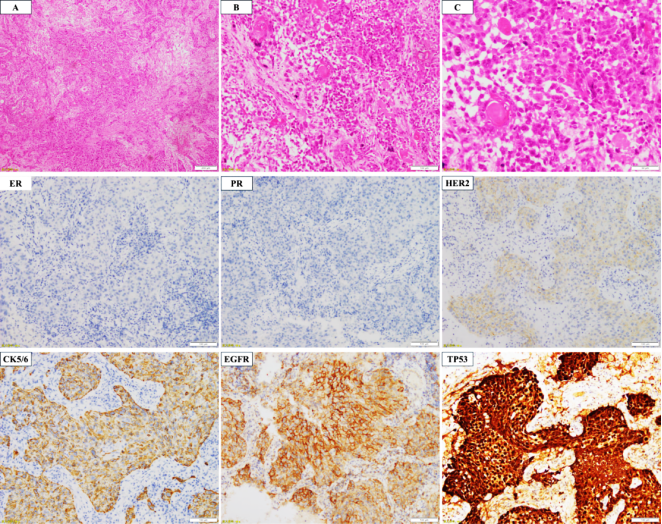
Figure 1. Hematoxylin and eosin (HE) and immunohistochemical staining results of lung tumors (100×).
(A) Keratin beads can be seen under low power microscope (HE, 40×);
(B) Atypical epithelial cells are seen in the lung tissue in nests and infiltration, along with keratin beads (HE, 100×);
(C) Tumor cells with abundant cytoplasm can be seen, obvious nucleoli can be seen in nuclei, some cells show keratinization that includes keratin bead formation (HE, 400×); Immunohistochemical staining results: ER, PR negative; HER2 1+, CK5/6, EGFR positive; TP53 greater than 95%, strongly positive.
A 45-year-old female patient was found to have multiple solid nodules in both lungs on routine postoperative chest computed tomography (CT) during follow-up on September 8, 2023. Given her medical history, these findings were highly suggestive of pulmonary metastases. Positron emission tomography/computed tomography (PET/CT) revealed hypermetabolic nodules in the dorsal segment of the right lower lobe and the lateral basal segment of the left lower lobe, consistent with the possibility of metastatic lesions. On September 21, 2023, the patient underwent video-assisted thoracoscopic surgery (VATS) with wedge resection of the left and right lower lobe nodules, along with intercostal nerve blockade. Intraoperative frozen section analysis indicated poorly differentiated invasive carcinoma, and metastatic disease could not be ruled out based on the patient’s history. Histopathological examination of all resected specimens revealed nests of atypical epithelial cells infiltrating the lung parenchyma. The tumor cells had abundant eosinophilic cytoplasm, prominent nucleoli, and focal areas of necrosis. Keratinization and keratin pearl formation were observed in parts of the tumor nests (Figure 1 A-C). IHC showed diffuse positive expression of p63, p40, CK5/6, CK7, p16, EGFR, and c-Myc, with partial positivity for SOX10. While TTF-1, Napsin A, and PAX8 were negative. Importantly, a panel biomarkers of mammary gland including GATA3, mammaglobin, and GCDFP-15 was detected and shown focal positive staining, supporting cancer cells were breast-originated. ER, PR, and AR were negative, HER2 was scored as 1+ by IHC, and there was strong diffuse p53 expression (>95%) with a Ki-67 labeling index of approximately 60% (Figure 1). The overall features were consistent with poorly differentiated squamous cell carcinoma; however, given the clinical history, a diagnosis of metastatic carcinoma of breast origin was favored. FISH further confirmed HER2 gene amplification.
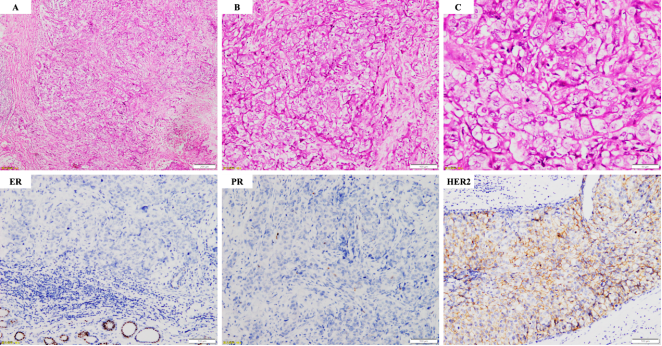
Figure 2. Hematoxylin and eosin (HE) and immunohistochemical staining results of breast tumors (100×).
(A) Tumor infiltration in normal breast tissue can be seen under low-power microscope, with local necrosis (HE, 40×); (B) Tumor cells are highly atypical, with pink cytoplasm (HE, 100×); (C) Tumor cells have large nuclei, visible nucleoli, pathological and mitotic figures; Immunohistochemical staining results: ER and PR negative, HER2 score of 2+.
For patient's past medical history, she was noted a palpable mass in the upper outer quadrant of the right breast in late May 2022. Digital mammography revealed a high-density mass in the right upper outer quadrant measuring approximately 3.2cm × 2.0cm, with an ill-defined margin and associated calcifications; it was classified as BI-RADS category 5, highly suggestive of malignancy. Breast magnetic resonance imaging (MRI) with plain and dynamic contrast-enhanced scans showed a punctate hypointense lesion in the same quadrant, measuring approximately 3.4cm × 2.9 cm × 2.5 cm, also classified as BI-RADS 5, consistent with breast carcinoma. Breast ultrasonography confirmed a hypoechoic mass measuring approximately 1.6cm × 3.4cm × 2.9cm, likewise categorized as BI-RADS 5. On June 6, 2022, the patient underwent a right modified radical mastectomy with right axillary lymph node dissection. Postoperative histopathological examination confirmed invasive ductal carcinoma of the breast, grade III (tubule formation: 3, mitotic count: 3, nuclear pleomorphism: 2; total score: 8). No definite evidence of lymphovascular invasion or perineural infiltration was noted. The surrounding breast ducts exhibited high-grade ductal carcinoma in situ (DCIS), accounting for approximately 20% of the tumor area (Figure 2 A-C). IHC revealed that ER, PR, and p63 were negative, while E-cadherin and p120 showed strong membranous positivity. CD34 highlighted vascular structures. HER2 was scored as 2+ by IHC, with p53 showing strong nuclear positivity in approximately 90% of tumor cells, and a Ki-67 labeling index of about 50% (Figure 2). FISH confirmed HER2 gene amplification. Following surgery, the patient received adjuvant chemotherapy with four cycles of the EC regimen (cyclophosphamide 0.9 g and Caelyx 50 mg). This was followed by combination with HER2-targeted therapy and chemotherapy (herceptin 380 mg, pertuzumab 420 mg, nab-paclitaxel 400 mg, and carboplatin 450 mg). From November 28, 2022, to September 6, 2023, the patient continued maintenance therapy with trastuzumab (360 mg) and pertuzumab (420 mg).
NGS results for both the pulmonary lesions and the primary breast carcinoma are summarized in Table 1.
Table 1. Comparison of genomic profiling results of breast and lung tumors.

Tumor type

Gene

Exon

Nucleotide changes

Amino acid changes

Variant classification

Mutation frequency / copy number

Invasive breast carcinoma, grade III

PIK3CA

exon21

c.3140A>G

p.H1047R

Class I variants

77.2%

TP53

exon8

c.818G>A

p.R273H

Class I variants

57.0%

ERBB2 (HER2)

-

-

-

Class I variants

5.5

ETV6

exon6

c.1105C>T

p.R369W

Class II variants

14.3%

ZFHX3

exon8

c.3590C>T

p.P1197L

Class III variants

31.5%

Lung tumor lesions (metastatic breast cacer with squamous differentiation)

PIK3CA

exon21

c.3140A>G

p.H1047R

Class I variants

72.9%

TP53

exon8

c.818G>A

p.R273H

Class I variants

60.9%

ERBB2 (HER2)

-

-

-

Class I variants

5.8

ETV6

exon6

c.1105C>T

p.R369W

Class II variants

18.2%

NRG1

exon1

c.341A>T

p.D114V

Class III variants

31.4%

SMARCA4

exon31

c.4441G>A

p.E1481K

Class III variants

11.0%

ZFHX3

exon9

c.6332C>T

p.P2111L

Class III variants

38.2%

3. Discussion
HER2-enriched breast cancer accounts for approximately 15–20% of all breast cancer Although targeting therapy against HER2, including trastuzumab; pertuzumab; and small molecule tyrosine kinase inhibitors (TKIs) such as lapatinib, tucatinib, and pyrotinib as well as antibody-drug conjugate (ADC) such as ado-trastuzumab emtansine (T-DM1) and Trastuzumab Deruxtecan (DS-8201), have significantly improved the clinical prognosis of this subtype of breast cancer, approximately 30% of patients with HER2-positive breast cancer still develop metastasis, particularly lung and brain metastasis, after diagnosis and/or primary tumor treatment, which are the main causes of death in patients with HER2-positive breast cancer. However, the mechanisms behind drug resistance, recurrence, and metastasis of various subtypes of breast cancer are not fully understood. Acquired mutations of HER2 gene, loss or masking of HER2 protein epitopes, activation of bypass pathways, heterogeneity of HER2 protein expression, and phenotypic plasticity have been proposed to explain the mechanisms behind drug resistance, recurrence, and metastasis of HER2-positive breast cancer . Among these, the transdifferentiated phenotypes of breast cancer cells, including squamous metaplasia, have garnered significant attention in clinical practice and translational research because of their roles in drug resistance, recurrence, and metastasis. However, the underlying causes and mechanisms driving this phenotypic plasticity across different subtypes of breast cancer during the disease progression remain incompletely understood .
This patient was presented with multiple nodules in both lungs and admitted to the hospital for examination and surgery. The medical history and imaging diagnosis indicated a high possibility of lung metastasis of breast cancer. However, frozen section diagnosis of the lung tumor revealed observations quite different from the common breast invasive ductal or lobular carcinoma. The tumor cells were found to be polygonal, round, spherical, and flaky, with a few cells showing keratinization, suggesting squamous cell carcinoma. Combined with the microscopic examination of postoperative paraffin sections, the diagnosis was inclined towards squamous epithelial cell carcinoma. The question was whether the tumor was a primary lung squamous cell carcinoma that existed during the breast cancer treatment of the patient or a squamous cell carcinoma that formed after breast cancer metastasis. This is a key distinguishing point in intraoperative and postoperative pathological diagnosis. To distinguish these two possible origins of the lesions, we first performed immunohistochemical testing, which showed that CK5/6, P63, P40, P16, EGFR, c-Myc, and SOX10, common markers of squamous cell carcinoma, were positively expressed in the lung nodules; however, TTF-1 and Napsin A, common markers of lung adenocarcinoma, were negatively expressed, indicating squamous cell differentiation. More importantly, these squamous cell-like structures fully or partially expressed common markers for identifying breast tissue lineage origin, including transcription factor GATA3, mamaglobin (partially positive), and GCDFP-15 (partially positive), but negatively or weakly expressed common therapeutic markers for breast cancer, for instance, ER and PR (negative) and HER2 (score of 1+). These findings suggest that the origin of lung squamous cell carcinoma is likely breast cancer metastasis.
Considering the medical history since the breast cancer lesions of the patient exhibited HER2 amplification, we further performed HER2 FISH to further confirm the pathological association between the two lesions. The results showed that HER2 amplification was also present in the squamous cell carcinoma lesions of the lungs, which provided an important basis for genetic variations, further confirming that the lung lesions originated from breast cancer metastasis. More importantly, we sampled the breast cancer and lung squamous cell carcinoma lesions of the patient for NGS, and the results showed PIK3CA p.H1047R and TP53 p.R273H-oncogenic mutations and ETV6 p.R369W-possible oncogenic mutations in both lung and breast lesion specimens. Copy number variation (CNV) analysis revealed that HER2 amplification in both breast and lung tissue lesions. In addition, the lesions at both sites had heterozygous/homozygous deletions of chromosomes, including 4p16.3→q23/4q31.3→q35.2, 8p23.3→p12, 17q21.31 (BRCA1), and increased or amplified 7p/q copies. Similar gene mutation spectra further confirmed that the lesions were caused by breast cancer metastasis.
To further clarify the molecular mechanism underlying phenotypic transformation after lung metastasis of breast cancer, we further analyzed the whole genome CNV of lesions at the two sites. The results showed that in addition to the above changes to the breast cancer gene profiling, the lung lesions also harbored missense mutations of unknown significance in NRG1 and SMARCA4/BRG1. More importantly, a series of chromosomal heterozygous/homozygous deletions were observed in the lung metastatic lesions, including 1p34.2→p12 (MUTYH/JAK1/CDC73), 2q (NFE2L2/PMS1/STAT4/CASP8), 5p/q (RICTOR/MAP3K1/APC/RAD50/MSH3/NSD1), 10q (SUFU), 11q (MEN1/RPS6KA4/INPPL1/EMSY/MRE11A/ATM/KMT2A), 12q (ARID2/ACVR1B), and 19p (STK11/INSR/KEAP1/SMARCA4). Further, some chromosomal regions with increased or amplified copies, including 11q13.3 (FGF3/FGF4/FGF19), 12p13.32 (FGF6/FGF23), and 19q12 (CCNE1) were also detected. These changes suggested that the lung lesions of the patient acquired multiple clonal evolutionary driver mutations; however, the underlying gene networks were interconnected.
The morphological changes and IHC of the primary lesion of the patient indicated typical HER2-positive breast cancer. Clinically, standardized postoperative chemotherapy and anti-HER2-targeted therapy were performed according to the current guidelines, but the lesion could not be completely controlled, leading to lung metastasis. NGS results showed that despite the breast cancer lesions of the patient showing HER2 amplification and overexpression, PIK3CA H1047R (77.2%) and TP53 R273H (57.0%) hotspot mutations were observed, which were the main driving mutations responsible for the primary targeted and chemotherapy resistance of the patient . A previous study showed that compared with HER2-negative breast cancer subtypes, HR−/HER2+ subtypes are more likely to metastasize to the lungs, and HER2 amplification with PIK3CA mutation can further promote breast cancer metastasis to the lungs . In addition, HER2-positive breast cancer with PIK3CA mutations is resistant to both trastuzumab monotherapy and trastuzumab combined with lapatinib or pertuzumab . Malignant tumors with TP53 mutations are widely resistant to chemotherapy and radiotherapy .
In breast cancer, differentiation of cancer stem cells/progenitor cells into luminal epithelial cells is often inhibited, and proliferating breast cancer cells may transdifferentiate into other cell lineages such as squamous cells . A previous study showed that among 1,000 cases of invasive breast cancer, approximately 3.6% of lesions showed squamous cell metaplasia, the most common form of metaplasia in breast cancer . Although, vast majority (>90%) of metaplastic breast cancers (MBC) lack expression of ER, PR, and HER2 , compared with other triple-negative invasive ductal carcinomas not otherwise specified, MBC exhibit aggressive behavior, poor response to chemotherapy, and worse prognosis , with squamous cell carcinoma exhibiting the worst prognosis.
The lesions of the patient in the present study showed squamous cell differentiation after lung metastasis, but the exact mechanism has not yet been fully elucidated. Studies have shown that MBC is highly enriched in key molecular variants of the PIK3CA/PIK3R1 (61%) pathway, suggesting that PIK3CA mutations may be a key event in squamous differentiation of breast cancer . This may be related to the fact that mutant PIK3CA induces breast tumor cells to undergo epithelial-mesenchymal transition and acquire stem cell-like phenotypes, further displaying lineage plasticity . In addition, breast cancer with squamous cell differentiation is often accompanied by high frequencies of TP53 (64%) and TERT (telomerase catalytic subunit) promoter mutations (25%) . Studies have shown that P53/BRCA1-deficient breast epithelial cells are prone to abnormal differentiation, which is often accompanied by DNA damage . Unrepaired DNA damage can cause squamous metaplasia . Abnormal accumulation of β-catenin induces epidermal differentiation in the mammary epithelium, eventually leading to squamous cell carcinoma . NGS results showed that in addition to the pathogenic mutation of PIK3CA, most metastatic lesions had heterozygous/homozygous deletion of chromosomes and showed functional loss of genes related to the squamous cell phenotype of metastatic lesions, including as NFE2L2 and KEAP1, along with a series of DNA damage repair-related and epigenetic-related gene functional losses, such as RAD50/EMSY/MRE11A/ATM/KMT2A, including copy number lost, increase in the copy number of fibroblast growth factor receptor signaling pathway-related ligand genes, such as FGF3/FGF4/FGF19/FGF6/FGF23, and high copy amplification of CCNE1. These findings suggest elevation in the activity of multiple oncogenes and suppression of the functions of tumor suppressor genes in the lesions.
FISH and NGS results showed that the lung metastatic lesions showed HER2 gene amplification, but HER2 protein expression was negative. However, the detailed mechanism has not yet been fully clarified. Recent studies have found that HER2 gene locus amplification is often accompanied by the formation of super-enhancers, thereby promoting HER2 overexpression . However, whether the super-enhancer specific for HER2 expression is missing in the context of squamous cell differentiation of tumor cells has not been extensively studied .
4. Conclusion
This article reports a case of a patient with cancer who was admitted to the hospital with pulmonary nodules as the main clinical manifestation, and the intraoperative frozen section diagnosis and postoperative pathological examinations of the tumors were confirmed as squamous cell carcinoma, which made differential diagnosis challenging. We integrated results of the morphological characteristics, IHC, FISH and NGS comprehensive genomic profiling (CGP), and finally confirmed a phenotypic transformation of breast cancer metastasis and squamous cell differentiation. In addition, CGP not only provided evidence for the diagnosis but also detected potential driver mutations that were related to the phenotypic transformation of the lesions. Future studies are needed to elucidate the molecular mechanism of HER2 gene amplification and negative protein expression in metastatic lesions.
Abbreviations

IHC

Immunohistochemical

FISH

Fluorescence in Situ Hybridization

NGS

Next-generation Sequencing

CT

Computed Tomography

PET/CT

Positron Emission Tomography/Computed Tomography

VATS

Video-assisted Thoracoscopic Surgery

MRI

Magnetic Resonance Imaging

DCIS

Ductal Carcinoma in Situ

HE

Hematoxylin and Eosin

TKIs

Tyrosine Kinase Inhibitors

ADC

Antibody-drug Conjugate

DS-8201

Trastuzumab Deruxtecan

CNV

Copy Number Variation

MBC

Metaplastic Breast Cancers

TERT

Telomerase Catalytic Subun

Author Contributions
Yu Qiu: Data curation, Writing – original draft
Yuanzhi Lu: Conceptualization, Writing – review & editing
Conflicts of Interest
The authors declare no conflicts of interest.
References
[1] Swain S M, Shastry M, Hamilton E. Targeting her2-positive breast cancer: Advances and future directions [J]. Nat Rev Drug Discov, 2023, 22(2): 101-126. HYPERLINK "
[2] Liang Y, Zhang H, Song X, et al. Metastatic heterogeneity of breast cancer: Molecular mechanism and potential therapeutic targets [J]. Semin Cancer Biol, 2020, 60: 14-27. HYPERLINK "
[3] Shi Q, Xuhong J, Luo T, et al. Pik3ca mutations are associated with pathologic complete response rate to neoadjuvant pyrotinib and trastuzumab plus chemotherapy for her2-positive breast cancer [J]. Br J Cancer, 2023, 128(1): 121-129.
[4] Wu Q, Li J, Zhu S, et al. Breast cancer subtypes predict the preferential site of distant metastases: A seer based study [J]. Oncotarget, 2017, 8(17): 27990-27996.
[5] Hanker A B, Pfefferle A D, Balko J M, et al. Mutant pik3ca accelerates her2-driven transgenic mammary tumors and induces resistance to combinations of anti-her2 therapies [J]. Proc Natl Acad Sci U S A, 2013, 110(35): 14372-14377.
[6] Berns K, Horlings H M, Hennessy B T, et al. A functional genetic approach identifies the pi3k pathway as a major determinant of trastuzumab resistance in breast cancer [J]. Cancer Cell, 2007, 12(4): 395-402.
[7] Enane F O, Saunthararajah Y, Korc M. Differentiation therapy and the mechanisms that terminate cancer cell proliferation without harming normal cells [J]. Cell Death Dis, 2018, 9(9): 912.
[8] Fisher E R, Palekar A S, Gregorio R M, et al. Mucoepidermoid and squamous cell carcinomas of breast with reference to squamous metaplasia and giant cell tumors [J]. Am J Surg Pathol, 1983, 7(1): 15-27.
[9] Tan P H, Ellis I, Allison K, et al. The 2019 world health organization classification of tumours of the breast [J]. Histopathology, 2020, 77(2): 181-185.
[10] Krings G, Chen Y Y. Genomic profiling of metaplastic breast carcinomas reveals genetic heterogeneity and relationship to ductal carcinoma [J]. Mod Pathol, 2018, 31(11): 1661-1674.
[11] Rakha E, Toss M, Quinn C. Specific cell differentiation in breast cancer: A basis for histological classification [J]. J Clin Pathol, 2022, 75(2): 76-84.
[12] Sihto H, Lundin J, Lundin M, et al. Breast cancer biological subtypes and protein expression predict for the preferential distant metastasis sites: A nationwide cohort study [J]. Breast Cancer Res, 2011, 13(5): R87.
[13] Wang H, Xiang D, Liu B, et al. Inadequate DNA damage repair promotes mammary transdifferentiation, leading to brca1 breast cancer [J]. Cell, 2019, 178(1): 135-151. e119.
[14] Juan L S, Freije A, Sanz-Gómez N, et al. DNA damage triggers squamous metaplasia in human lung and mammary cells via mitotic checkpoints [J]. Cell Death Discov, 2023, 9(1): 21.
[15] Lloyd-Lewis B, Gobbo F, Perkins M, et al. In vivo imaging of mammary epithelial cell dynamics in response to lineage-biased wnt/β-catenin activation [J]. Cell Rep, 2022, 38(10): 110461.
[16] Kaneko S, Takasawa K, Asada K, et al. Mechanism of erbb2 gene overexpression by the formation of super-enhancer with genomic structural abnormalities in lung adenocarcinoma without clinically actionable genetic alterations [J]. Mol Cancer, 2024, 23(1): 126.
[17] Jiang Y, Jiang Y Y, Xie J J, et al. Co-activation of super-enhancer-driven ccat1 by tp63 and sox2 promotes squamous cancer progression [J]. Nat Commun, 2018, 9(1): 3619.
Cite This Article
  • APA Style

    Qiu, Y., Lu, Y. (2025). Lung Metastasis of HER2-positive Breast Cancer with Squamous Cell Differentiation Phenotype: A Case Report. American Journal of Clinical and Experimental Medicine, 13(6), 170-176. https://doi.org/10.11648/j.ajcem.20251306.12

    Copy | Download

    ACS Style

    Qiu, Y.; Lu, Y. Lung Metastasis of HER2-positive Breast Cancer with Squamous Cell Differentiation Phenotype: A Case Report. Am. J. Clin. Exp. Med. 2025, 13(6), 170-176. doi: 10.11648/j.ajcem.20251306.12

    Copy | Download

    AMA Style

    Qiu Y, Lu Y. Lung Metastasis of HER2-positive Breast Cancer with Squamous Cell Differentiation Phenotype: A Case Report. Am J Clin Exp Med. 2025;13(6):170-176. doi: 10.11648/j.ajcem.20251306.12

    Copy | Download

  • @article{10.11648/j.ajcem.20251306.12,
      author = {Yu Qiu and Yuanzhi Lu},
      title = {Lung Metastasis of HER2-positive Breast Cancer with Squamous Cell Differentiation Phenotype: A Case Report},
      journal = {American Journal of Clinical and Experimental Medicine},
      volume = {13},
      number = {6},
      pages = {170-176},
      doi = {10.11648/j.ajcem.20251306.12},
      url = {https://doi.org/10.11648/j.ajcem.20251306.12},
      eprint = {https://article.sciencepublishinggroup.com/pdf/10.11648.j.ajcem.20251306.12},
      abstract = {Drug resistance, recurrence, and metastasis are the main challenges that can lead to treatment failure and deteriorate outcomes of patients with breast cancer. Breast cancer metastasizes to different organs and may present with different phenotypic features. However, the underlying mechanisms of phenotypic plasticity of breast cancer still remain unclear. We herein report a case of HER2-positive breast cancer in which the patient developed acquired therapeutic resistance following standard postoperative adjuvant chemotherapy combined with anti-HER2 targeted therapy. The patient initially responded to treatment; however, one year after completion of therapy, new bilateral pulmonary nodules emerged. Subsequent pathological examination confirmed metastatic carcinoma with a transdifferentiated squamous cell phenotype. Comprehensive biomarker analyses, including immunohistochemistry (IHC), fluorescence in situ hybridization (FISH), and next-generation sequencing (NGS), were performed on matched samples from the primary breast tumor and the corresponding lung metastatic lesions. Integrated diagnostic results confirmed that the pulmonary lesions were metastatic in origin from the breast, harboring HER2 amplification as well as PIK3CA and TP53 mutations. In contrast to the primary lesion, the metastatic lung lesions demonstrated acquisition of a squamous phenotype, accompanied by multiple chromosomal heterozygous/homozygous deletions and copy-number gain that may have contributed to this phenotypic transformation. Despite HER2 amplification, the pulmonary metastases showed negative HER2 protein expression, possibly reflecting tissue-specific gene expression differences. These findings provide new insights for the clinical management of HER2-positive breast cancer.},
     year = {2025}
    }
    

    Copy | Download

  • TY  - JOUR
    T1  - Lung Metastasis of HER2-positive Breast Cancer with Squamous Cell Differentiation Phenotype: A Case Report
    AU  - Yu Qiu
    AU  - Yuanzhi Lu
    Y1  - 2025/12/17
    PY  - 2025
    N1  - https://doi.org/10.11648/j.ajcem.20251306.12
    DO  - 10.11648/j.ajcem.20251306.12
    T2  - American Journal of Clinical and Experimental Medicine
    JF  - American Journal of Clinical and Experimental Medicine
    JO  - American Journal of Clinical and Experimental Medicine
    SP  - 170
    EP  - 176
    PB  - Science Publishing Group
    SN  - 2330-8133
    UR  - https://doi.org/10.11648/j.ajcem.20251306.12
    AB  - Drug resistance, recurrence, and metastasis are the main challenges that can lead to treatment failure and deteriorate outcomes of patients with breast cancer. Breast cancer metastasizes to different organs and may present with different phenotypic features. However, the underlying mechanisms of phenotypic plasticity of breast cancer still remain unclear. We herein report a case of HER2-positive breast cancer in which the patient developed acquired therapeutic resistance following standard postoperative adjuvant chemotherapy combined with anti-HER2 targeted therapy. The patient initially responded to treatment; however, one year after completion of therapy, new bilateral pulmonary nodules emerged. Subsequent pathological examination confirmed metastatic carcinoma with a transdifferentiated squamous cell phenotype. Comprehensive biomarker analyses, including immunohistochemistry (IHC), fluorescence in situ hybridization (FISH), and next-generation sequencing (NGS), were performed on matched samples from the primary breast tumor and the corresponding lung metastatic lesions. Integrated diagnostic results confirmed that the pulmonary lesions were metastatic in origin from the breast, harboring HER2 amplification as well as PIK3CA and TP53 mutations. In contrast to the primary lesion, the metastatic lung lesions demonstrated acquisition of a squamous phenotype, accompanied by multiple chromosomal heterozygous/homozygous deletions and copy-number gain that may have contributed to this phenotypic transformation. Despite HER2 amplification, the pulmonary metastases showed negative HER2 protein expression, possibly reflecting tissue-specific gene expression differences. These findings provide new insights for the clinical management of HER2-positive breast cancer.
    VL  - 13
    IS  - 6
    ER  - 

    Copy | Download

Author Information